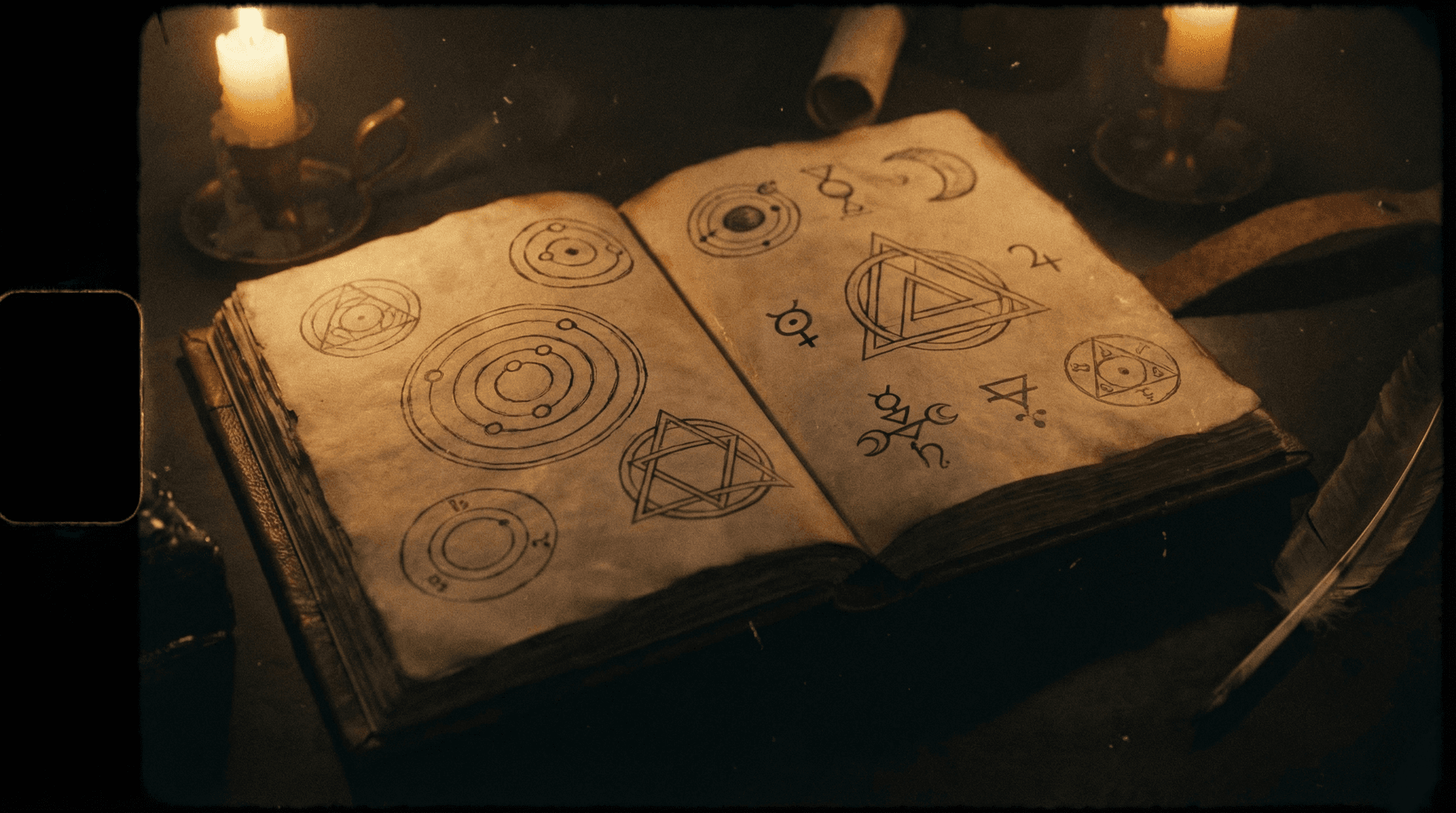
An archetype is a pattern. An alchetype is a pattern in transformation. The distinction is subtle. It changes everything.
Most personality frameworks treat the patterns they identify as fixed — you are an INTJ, you are a Type 4, you are the Sage. These categories are useful for orientation. They can also calcify into identity, which is the point where they stop being maps and start being cages.
The alchetype framework was built on a different premise: the pattern is real, but it's in motion.
The Etymology: What Alchemy Actually Meant to Jung
The word "alchetype" is a compound of alchemy and archetype. That pairing is deliberate.
Find yours
Which pattern is running you right now — and what's the shadow it carries?
Take the free assessment →Free · 15 minutes · Full report $49
Jung spent significant time studying alchemy — not as a primitive precursor to chemistry, but as a symbolic system for describing psychological transformation. The alchemical process, in Jung's reading, was a map of what happens when the unconscious material gets brought to light. Lead becoming gold was the outer story. The inner story was the ego meeting what it had been avoiding.
Alchemy was always about transformation, not type. The base material didn't stay base. It changed under the right conditions — heat, pressure, time, attention.
The archetype, in Jung's original framework, carries the same potential. It's not a stable category. It's an active force. The Hero pattern doesn't just describe how you act. It shapes what you're drawn toward, what you fear, and what collapses when conditions change.
An alchetype, then, is an archetype understood through the lens of that transformation potential. The pattern is real. The shadow is real. And neither is permanent.
Why "Alchetype" Instead of "Archetype"
The difference between a type and a pattern is a question of motion.
A type describes what something is. A pattern describes how something moves. When you identify yourself as a type, you're claiming a stable fact about your psychology. When you identify a pattern moving through you, you're describing something more accurate: a dominant tendency, currently active, with particular habits of expression and collapse.
This matters practically. People who identify strongly with a type tend to protect it. The Hero who "is" a Hero defends heroic behavior even when it's costing them. The Healer who "is" a Healer overextends because their identity depends on the role. The type becomes the ego's project.
When the pattern is understood as something moving through you rather than something you are, there's more room. Room to notice it. Room to work with the shadow rather than suppress it further.
The Alchetype framework uses this language precisely. The X pattern is moving through you right now. The X shadow is the suppressed counterpart that's running alongside it. Neither is your permanent identity.
The 12 Alchetypes and What Makes Them Different
The Alchetype framework maps 12 patterns, each with a positive pole and a shadow pole. These aren't optimistic and pessimistic versions of the same type. They're what the pattern looks like when integrated versus what it looks like when the shadow is running the show.
The 12 alchetypes: Visionary/Fantasist, Empath/Mirror, Hero/Martyr, Rebel/Saboteur, Adventurer/Runaway, Creator/Hoarder, Sovereign/Tyrant, Alchemist/Manipulator, Healer/Enabler, Mystic/Ghost, Guide/Preacher, Storyteller/Escapist.
Each shadow pole has a name because naming it is part of how it loses power. The Healer who knows they carry the Enabler pattern can see it operating. The Sovereign who names the Tyrant isn't more likely to become one. They're less likely, because the pattern has moved from unconscious to named.
The full breakdown of all 12 patterns, including what each looks like in work and creative life, is in The 12 Jungian Archetypes Explained.
Why the Shadow Is Central to the Alchetype Framework
Every alchetype comes with its shadow. This is the feature that makes the framework diagnostic rather than flattering.
Most personality tests return your strengths. They tell you what you do well, what you lead with, what makes you effective. That's half the story. The shadow is the other half: the pattern you've most suppressed, the one that's quietly shaping your decisions, your blocks, and your recurring problems in a way you can't see clearly from the inside.
The Visionary who doesn't know their shadow is the Fantasist will keep starting and not finishing. The Creator who hasn't named the Hoarder will keep doing the work and never releasing it. The shadow doesn't disappear when you ignore it. It operates without your permission.
Naming it changes the relationship. The shadow doesn't need to be eliminated. It needs to be understood. When the suppressed pattern gets acknowledged, it stops running as static interference and becomes information.
The full guide to the shadow archetype covers how the shadow forms, how it operates, and what it tends to cost.
What the Framework Is Actually For
Knowing your alchetype is not the endpoint. It is a diagnostic step.
The Healer who names the Enabler can see the specific way care gets weaponized against receiving. The Visionary who names the Fantasist can recognize the planning loop as avoidance rather than preparation. The Creator who names the Hoarder understands why good work never gets released. The name does not do the work. It makes the work possible by making the pattern visible.
The shadow is where this becomes practical. Most personality frameworks stop at the positive pole: here is your gift, here is how you lead, here is why people are drawn to you. That information is accurate as far as it goes. The alchetype framework insists on the other half, because the other half is where the recurring problems live.
The Sovereign who does not know their Tyrant will keep losing people they need. The Guide who has not named the Preacher will keep giving advice when what the client needs is space. The Alchemist who has not seen the Manipulator will keep building systems that serve the builder more than the people the system was supposed to help.
None of this is fixed. That is the alchemy. The pattern is real. The shadow is real. The capacity to move between them, consciously, is what individuation actually looks like in practical life.
If you are new to shadow work and the Jungian framework the alchetypes are built on, that article is the clearest entry point.
Frequently Asked Questions
What does alchetype mean?
Alchetype is a coined term combining alchemy and archetype. It describes a psychological pattern understood through the lens of transformation, not fixed identity. Where an archetype names the pattern, an alchetype names the pattern in motion — including the shadow side that runs alongside it.
How is an alchetype different from a Jungian archetype?
Jung's archetypes are universal patterns in the collective unconscious — inherited structures that organize experience. The alchetype framework builds on that foundation by pairing each pattern with a named shadow, and by emphasizing that neither the pattern nor the shadow is permanent. The key difference is the transformation layer: each alchetype is an archetype understood through what it becomes when integrated.
Can my alchetype change over time?
The dominant pattern can shift, especially through significant change or conscious shadow work. What tends to stay consistent is the structure of the shadow. The framework treats both as currently active, not permanently fixed.
Why does the Alchetype framework include the shadow when most tests don't?
Most personality tests return your strengths and leave the shadow out. But the shadow is the part that shapes decisions and blocks without awareness. Including it makes the framework diagnostic rather than flattering. The goal is an accurate map, not a comfortable one.
The only way to know your alchetype — and the shadow it carries — is to take the assessment.