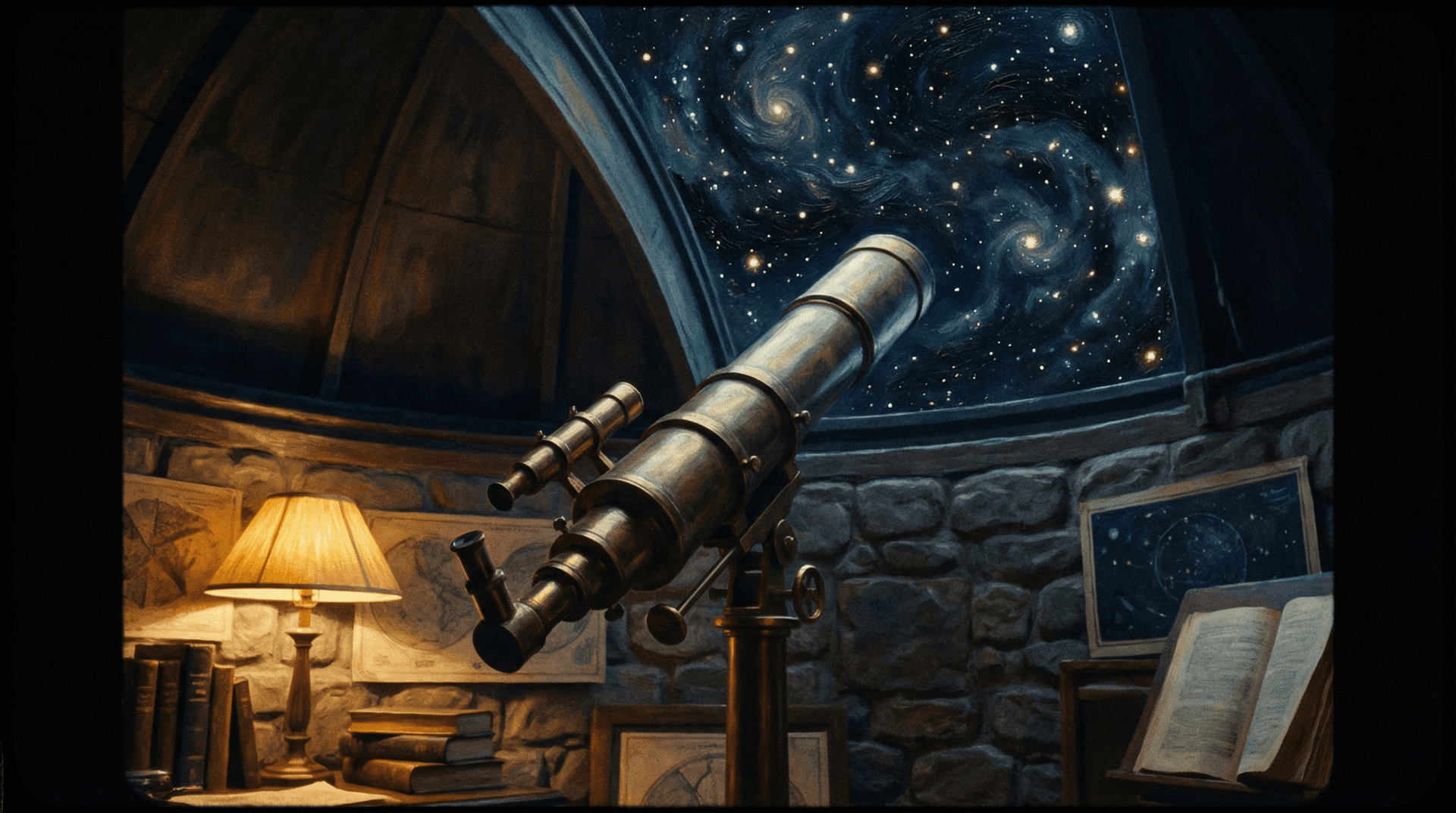
You've had the idea that later became a company, a trend, a movement. You saw it clearly. You had the outline, the name, maybe a deck. And then someone else built it, three years later, and you watched it succeed in the market and felt something complicated. Pride that you were right. Frustration that you didn't go first.
You live a few steps ahead of most rooms. It's useful and it's lonely in equal measure.
What the Visionary pattern actually is
The Visionary pattern is organized around possibility. The specific capacity to see the shape of what doesn't exist yet, to perceive a future configuration before any evidence of it is present, and to feel genuine excitement about building toward it.
This isn't optimism. Optimism is a stance toward the present. The Visionary is perceiving a specific future state with a clarity that can feel more real than the current moment. The idea arrives complete, or nearly complete, in a way that's difficult to explain to people who don't experience it.
Find yours
Which pattern is running you right now — and what's the shadow it carries?
Take the free assessment →Free · 15 minutes · Full report $49
Jung's framework traces this to the intuitive function — the part of the psyche that processes possibility rather than actuality. The Visionary pattern is what happens when that function is dominant. It perceives patterns and trajectories. It generates rather than processes.
The gift
When the Visionary pattern is working well, it produces ideas that matter. The product that exists three years before the market is ready for it. The company built around a problem no one has named yet. The creative direction that reorients a field. Some of those fields are being named in real time — what's now called the wisdom economy is one Visionaries tend to sense before the language catches up.
The Visionary creates possibility where others see limitation. That's not a figure of speech. They literally perceive different options in the same situation, because they're not confined to what currently exists. The best Visionary-driven work tends to look prescient in retrospect.
This pattern also inspires movement in others. People follow the Visionary because the vision itself is motivating, because it names something they wanted to move toward but hadn't articulated. The Visionary gives direction.
The shadow: The Fantasist
The shadow archetype of the Visionary is the Fantasist.
The Fantasist lives in the future so completely that the present becomes intolerable. Every current project is less interesting than the next possible project. Every half-built thing is already boring compared to the thing it suggested. Starts accumulate. Finishes don't.
The gap between vision and execution isn't experienced as a problem to be crossed. It becomes a permanent address. The Fantasist is always at the beginning, always in the most exciting part, always in the stage before the work requires something that doesn't feel like inspiration.
The pattern is self-reinforcing. Each new idea feels like a fresh start, a return to the state of pure possibility where everything is still perfect. The existing projects, with all their complications and partial failures and slow work, can't compete with that. So they get abandoned, or indefinitely paused, or revised into something new enough to feel exciting again.
The gap between the Visionary's actual output and their actual potential becomes a source of quiet grief.
How this pattern shows up in work and creative life
The Visionary pattern is well suited to founding roles, creative direction, brand strategy, and early-stage product work. Any role where the job is to see what doesn't exist yet and generate the initial momentum toward it.
The friction comes in the middle. The Visionary is exceptional at starts and at the end vision. The sustained, incremental, unglamorous work of the middle is where the Fantasist can take over. This pattern often benefits from structures and partners that create accountability for completion. The Alchemist archetype is a useful counterpart here — where the Visionary opens, the Alchemist transforms the material into something finished. The specific ways the Fantasist shadow plays out in a business context — the offer that never ships, the pivot before anything has a chance to work — are mapped in shadow work for entrepreneurs.
Content made from this pattern has a quality of expansion. It opens territory. The Visionary's writing tends to make readers see things they couldn't see before. The shadow version announces visions that never arrive, builds audiences around promises that don't quite land.
In teams, the Visionary is the person who changes everything about a project and then loses interest before it ships. This pattern tends to know this about themselves and feel some combination of shame and helplessness about it.
The Visionary in Collaboration
The Visionary pattern creates specific dynamics in partnerships and teams that are worth naming directly.
Because the Visionary generates momentum through vision, people tend to organize around them early. Teams form around the idea. Hires are made. Energy builds. The problem arrives in the middle phase, when the work becomes operational rather than visionary, and the Visionary's engagement drops in proportion to the distance from the original spark.
This pattern tends to produce a recognizable shape in business relationships: the Visionary as founding force, followed by a slow withdrawal as the work becomes maintenance and iteration rather than creation. Partners and hires who joined for the vision find themselves holding an increasingly operational role while the Visionary is already somewhere new in their head.
Integration here is not about becoming operationally interested. The Visionary's gift is not supposed to become something else. It is about developing enough honesty in collaboration to name the pattern explicitly, to structure the partnership around what the Visionary actually provides rather than what a generic founder is supposed to provide.
The Visionary pattern has a particular relationship with the Adventurer archetype — both move fast and struggle to stay. The difference is the direction: the Adventurer moves outward into new territory, the Visionary moves forward into the next version of the same territory. In practice, they can be hard to distinguish. Both patterns thrive when they build structures that make staying feel like discovery rather than confinement.
The most functional Visionary-led ventures tend to include people who close what the Visionary opens. The specific language for this matters. Hiring for "execution support" obscures it. Hiring for "completion" or "landing what I start" gets closer to the actual need. That level of honest self-assessment about the pattern is what shadow work for entrepreneurs makes possible.
The integration question
Integration for the Visionary is finding genuine value in the half-built. The shipped imperfect version. The thing that exists in the world rather than in the imagination.
This isn't about lowering standards. It's about the recognition that a vision that ships and changes one person's life is more real than a perfect vision that never leaves your notebook. The Fantasist avoids this truth because arriving means the possibility space closes. Integration means developing a relationship with closure that doesn't feel like loss.
The behavioral marker: the integrated Visionary can stay with a project past the exciting beginning. They can do the middle work. They can release something knowing it's not the complete vision and feel the satisfaction of that rather than the compromise. Completion becomes part of the creative act rather than the end of it.
What is the visionary archetype?
The visionary archetype is the Jungian pattern organized around future possibility. People living this pattern perceive what doesn't yet exist with unusual clarity and generate ideas others catch up to years later. They create possibility where others see limitation and naturally inspire movement toward new directions.
What is the visionary archetype shadow?
The shadow of the visionary archetype is the Fantasist. The Fantasist lives in future possibility so completely that present execution becomes permanently secondary. Projects start and don't finish. The vision is always clearer and more compelling than the work required to build it. The gap between idea and completion becomes a chronic condition.
What does the visionary archetype mean in Jungian psychology?
In Jungian psychology, the visionary archetype connects to the intuitive function, the capacity to perceive possibility and pattern before it's manifest. Jung saw this function as essential for development. The shadow emerges when intuition becomes a substitute for the slower work of building, and the psyche retreats to pure possibility as a way of avoiding the demands of execution. The 12 Jungian archetypes each carry a version of this structure.
The only way to know your alchetype — and the shadow it carries — is to take the assessment.