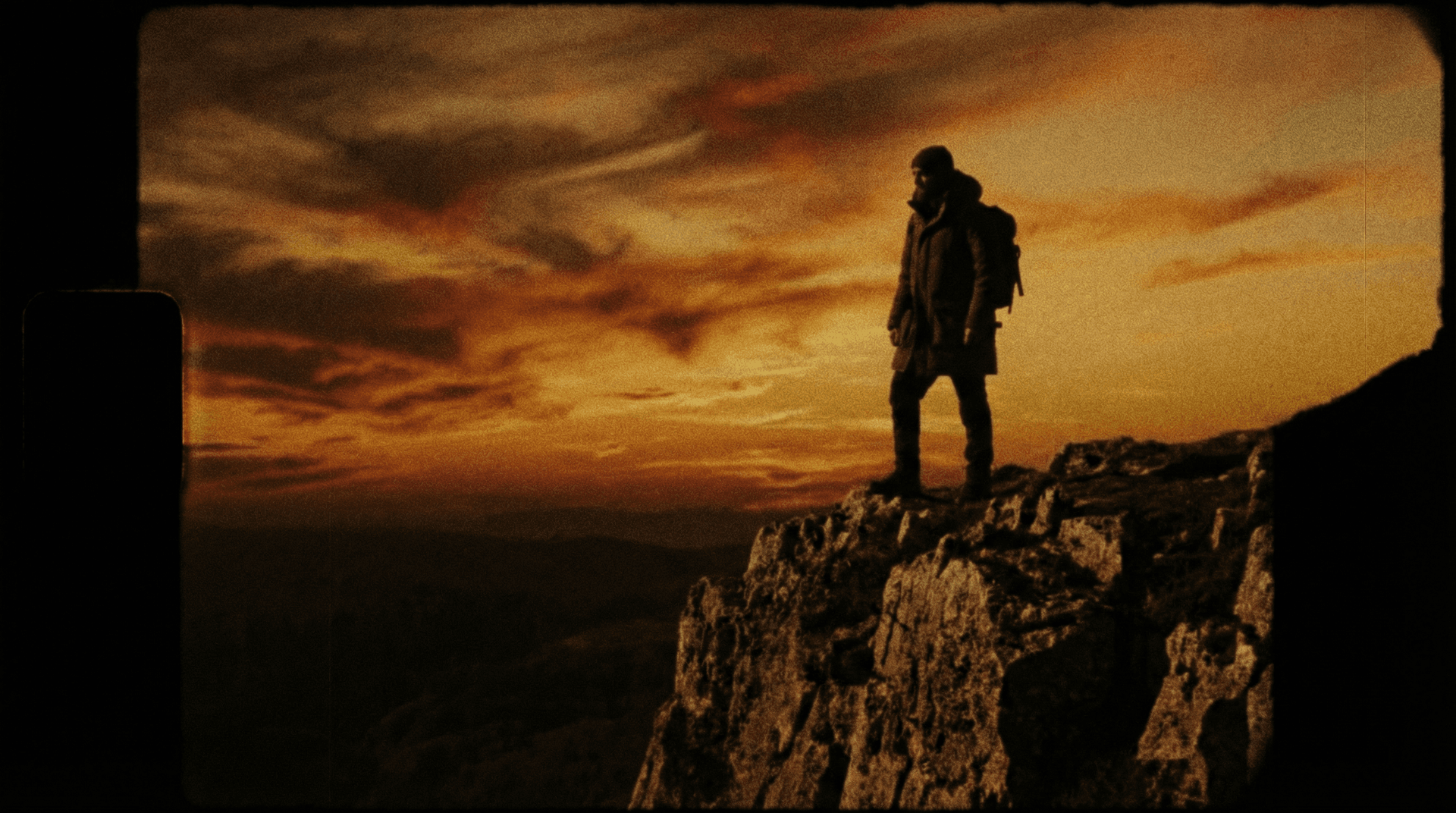
You take on what others step back from. Not always by choice. Sometimes it's just what's left when everyone else has found a reason to not be the person who handles it. You handle it.
You've built things that required years. You've stayed past the point where most people left. You've carried a project, a team, a commitment through to something real, and then moved to the next one without quite stopping to mark what you did.
The question at the edge of all of it: for whom?
What the Hero pattern actually is
The Hero pattern is organized around effort and the crossing of real difficulty. The capacity to face what's hard, to sustain that effort through time, and to produce something that required the full weight of that commitment.
Find yours
Which pattern is running you right now — and what's the shadow it carries?
Take the free assessment →Free · 15 minutes · Full report $49
Joseph Campbell drew on Jung's hero archetype in his mapping of the hero's journey, and the structural accuracy of that map is part of what makes it compelling across cultures. The Hero is the personality organized around accepting the call, enduring the difficulty, and returning with something that matters.
This is the pattern that builds things requiring years of consistent work. The gap between the vision and the reality is crossed through effort, not inspiration, and the Hero has the capacity to cross it.
The gift
When the Hero pattern is working well, it produces things that couldn't exist without it. The company that got through years of no traction. The book that took six drafts. The relationship that endured a crisis and came out different but intact. These things require the Hero's specific capacity: to keep going when there is no external reason to keep going.
The Hero inspires through action. People watch them and find something possible that didn't seem possible before. They demonstrate that the gap can be crossed. That persistence is real, that the difficult thing can be done.
In work, this pattern creates high-performance outcomes in demanding environments. The Hero doesn't need everything to be comfortable to function. They often function better under real pressure. This is one of the places the Hero pattern shows up most visibly in coaching and facilitation work: the capacity to stay present with difficulty becomes what makes space safe for others.
The shadow: The Martyr
The shadow archetype of the Hero is the Martyr.
The Martyr is what the Hero becomes when the effort stops being in service of a real goal and starts being in service of an identity. When the work is a way of proving something, specifically of proving worth through suffering.
The Martyr carries burdens that weren't theirs to carry. Takes on responsibilities that should belong to others. Says yes when no would be appropriate, not because of genuine commitment but because saying no would feel like admission that they couldn't handle it. Exhaustion becomes evidence of dedication. Overwork becomes a form of virtue.
The Martyr also deflects recognition. Compliments land wrong, achievements get minimized, rest feels like failure. The structural logic is this: if effort and suffering are the proof of worth, then acceptance of recognition would end the proof. The Martyr keeps the effort ongoing because it's the effort that generates the self-worth, not the outcome.
The wound underneath: worth was originally conditioned on what was done, not on what was. The Hero learned that love and safety came from achieving, from carrying, from being capable. Rest was not safe. Receiving was not safe. Only effort was reliable.
How this pattern shows up in work and creative life
The Hero pattern is suited to ambitious, long-horizon work. Building a company, writing a substantial body of work, training for something that requires years. Any domain where the gap between vision and reality needs to be crossed through sustained commitment.
In teams, this pattern tends to produce both great performance and eventual breakdown. The Hero carries more than their share and doesn't ask for help until the weight is unsustainable. Collaborators sometimes don't realize how much the Hero was doing until they leave or collapse. Where the Sovereign archetype builds structures that distribute the weight across others, the Hero tends to absorb it personally.
Content made from this pattern has a quality of earned perspective. The Hero has been through it. Their work carries credibility that can't be manufactured. The shadow version produces martyrdom content: look how much I've sacrificed, look what I carry, look how hard this has been. The audience feels the weight without being inspired.
The integration question
Integration for the Hero is the specific practice of making rest as legitimate as effort. This is harder than it sounds, because the Martyr has a sophisticated system for making rest feel like failure.
The behavioral marker: the integrated Hero can receive recognition without deflecting it. Can stop when the work is done rather than finding the next impossible thing to carry. Can accept help. Can say this is enough for today and mean it without anxiety.
The Hero in integration doesn't stop being capable of great effort. They stop requiring suffering as proof that the effort was real. The work gets done and then they actually rest. That rest becomes a resource rather than a threat. And the next effort, when it comes, is met from fullness rather than from depletion.
How this pattern relates to others
The Hero archetype sits close to the Sovereign in the Alchetype framework. Where the Hero crosses difficulty through sustained personal effort, the Sovereign builds structures that distribute the load. Many people living the Hero pattern find themselves drawn toward leadership, and discover the Sovereign's shadow waiting there. Organizing others requires a different muscle than carrying the weight yourself.
The Alchemist archetype is a useful contrast in orientation. The Alchemist converts difficulty into something new. The Hero endures it. Both are suited to demanding environments. The difference is whether the goal is transformation or completion, and that difference shapes everything about how each pattern moves through resistance.
When the Hero's Martyr shadow is most active, the Guide archetype offers an instructive parallel. The Guide learns, over time, to release the teaching once it has been given. For the Hero, the equivalent threshold is releasing the effort once the work is done, and trusting the rest that follows rather than reaching for the next impossible thing to carry.
What is the hero archetype?
The hero archetype is the Jungian pattern organized around effort and the crossing of real difficulty. People living this pattern have genuine staying power, build things that require years, and inspire others through action rather than words. The capacity to persist in the absence of external reinforcement is the pattern's specific gift.
What is the hero archetype shadow?
The shadow of the hero archetype is the Martyr. When effort becomes an identity rather than a means, suffering becomes proof of worth. The Martyr carries what isn't theirs, deflects recognition, and experiences rest as a form of failure. Exhaustion replaces achievement as the measure of dedication.
What does the hero archetype mean in Jungian psychology?
In Jungian psychology, the hero archetype is the ego's developmental force — the capacity to face challenge, endure difficulty, and emerge transformed. Joseph Campbell's hero's journey is a direct extension of this archetype. Jung saw the hero as necessary but also dangerous: the pattern that produces growth can also produce the compensatory shadow of self-destruction through unending effort. The 12 Jungian archetypes each carry this duality.
The only way to know your alchetype — and the shadow it carries — is to take the assessment.