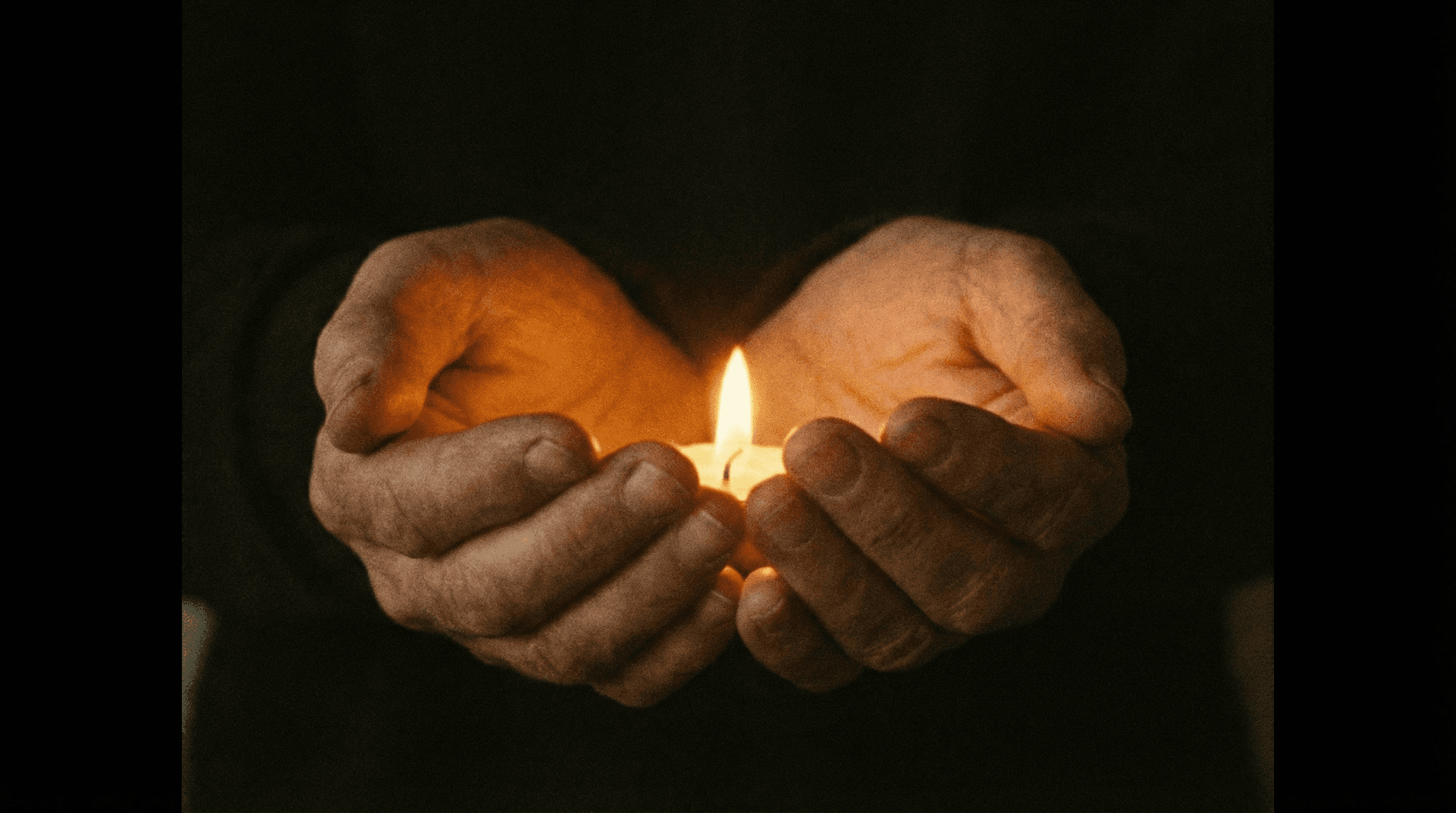
People find you. You didn't advertise this capacity, but somehow it became known. The person at the party who gravitates to the corner where you are. The colleague who asks if you have a minute, and then talks for an hour. The client who says they've never told anyone this before.
You have genuine capacity to hold what others are carrying. You don't rush to fix it, you don't flinch, you don't make it about you. People feel that, and they come toward it.
What they don't always see is the cost.
What the Healer pattern actually is
The Healer pattern is organized around care. The specific ability to create safety for another person's vulnerability, to attune to what they actually need rather than what would be easier to give, and to hold difficulty without collapsing toward premature resolution.
Find yours
Which pattern is running you right now — and what's the shadow it carries?
Take the free assessment →Free · 15 minutes · Full report $49
This isn't empathy in the vague sense. It's a specific structural capacity. The Empath alchetype is a related but distinct pattern — where the Empath absorbs what others are feeling, the Healer creates the conditions for it to surface and move. The Healer can be in the presence of pain, confusion, or crisis without needing it to stop. That's unusual and genuinely valuable.
Jung's concept of the wounded healer, drawn from the myth of Chiron, is central here. The healer's capacity often develops through their own wound. The attunement to suffering comes from having navigated suffering. The gift and the origin story are the same.
The gift
When the Healer pattern is working well, it creates something rare: a space where another person can be fully what they are without editing it for palatability. Not many people can offer that. The Healer can hold ambivalence, contradiction, breakdown, and the slow work of recovery without making the other person feel like a burden.
This produces strong outcomes in therapy, coaching, somatic work, teaching, and any domain requiring genuine attunement. The Healer's clients and students often describe feeling understood in ways that surprised them, as though something they had never found words for was suddenly met.
The work done from this pattern has a quality of genuine presence. It's not a technique. It's contact.
The shadow: The Enabler
The shadow archetype of the Healer is the Enabler.
The Enabler gives endlessly. It doesn't require, doesn't ask, doesn't receive. Its relationships are structured around other people's needs, and when those needs are met and the other person grows and moves away, there's a specific grief in that. The Enabler, at some level, is more comfortable with the person who still needs than with the person who has arrived.
The deeper structure is this: the Enabler unconsciously needs to be needed. The giving has become its own sustenance. When the Healer's wound hasn't been integrated, it creates a gravitational pull toward people who are suffering in the specific way the Healer once suffered. Not because they want to recreate suffering, but because that's the shape of the connection they know how to make.
The wound that drove the Healer to care work becomes the wound they keep recreating. The client who never quite heals. The relationship that is always more crisis than growth. The pattern that looks like dedication and functions as avoidance. This is the Healer's particular form of spiritual bypassing: care as a structure for avoiding the self, dressed in the language of service.
How this pattern shows up in work and creative life
The Healer pattern fits naturally in therapy, coaching, somatic and bodywork practices, teaching, and community building. Any role requiring genuine attunement to what another person is actually experiencing, beneath what they're presenting, is suited to this pattern. For coaches specifically, shadow work for coaches maps how the Enabler operates inside a practice — and where it shapes pricing, client relationships, and niche clarity. A short list of coaching niche ideas for spiritual practitioners is worth reading alongside that, to see what shape the Healer's practice might actually take.
In business, the Healer often undervalues their work. There's a specific discomfort with charging appropriately for care, a sense that real helping shouldn't come with a price. This is shadow material. The Enabler has made giving a spiritual identity, and money introduces a transaction that feels like it contaminates the relationship.
Content made from this pattern is notable for its safety. People feel held by it. The Healer's writing, videos, and frameworks create the same quality of space as their direct work. The shadow version produces content that never challenges, never asks anything of the audience, because challenge might break the safety.
The integration question
Integration for the Healer is learning to receive as fluently as they give. Not as a nice idea, but as a practiced skill. Shadow work for healers maps this specifically — how the Enabler operates inside a care practice and what the integration actually looks like in practice. The shame that tends to block this is specific: asking for what you need can feel like failing at the thing you're supposed to embody. The practitioner identity becomes a container that makes receiving feel incompatible with the role. That's not a spiritual position. It's the Enabler protecting itself with the Healer's vocabulary.
The integrated Healer has their own needs as present to them as their clients' needs. They can ask for what they need in relationships. They can feel the difference between genuine care and care as avoidance of their own work. They can let a client grow and leave without experiencing it as abandonment.
The behavioral marker is specific: the integrated Healer can be in a session, a conversation, a relationship, and track their own experience in it, not just the other person's. They can notice when their giving has shifted from genuine presence to anxious maintenance. That noticing is not a failure. It's the skill.
When the Healer can receive, the giving becomes sustainable. And sustainable care is the only kind that doesn't eventually disappear.
What is the healer archetype?
The healer archetype is the Jungian pattern organized around care and attunement. People living this pattern create genuine safety for others' vulnerability and have a structural capacity to hold difficulty without rushing it toward resolution. They are often drawn to care work, and their gift tends to develop from their own wound.
What is the healer archetype shadow?
The shadow of the healer archetype is the Enabler. The Enabler gives without receiving, unconsciously needs to be needed, and recreates the original wound in their client and care relationships. The pattern that looks like selfless dedication is also a structure for avoiding the Healer's own needs and growth.
What does the healer archetype mean in Jungian psychology?
In Jungian psychology, the healer archetype is connected to the wounded healer concept from Chiron's myth. Jung believed the capacity to heal emerges from the wound rather than despite it. The shadow is that the wound, unintegrated, becomes a trap: the Healer continues to seek relationships that mirror their original pain rather than moving past it. The 12 Jungian archetypes each carry this structure, gift and shadow arising from the same source.
For a deeper look at the Healer pattern — how it operates across different life contexts and what the full integration arc looks like — see The Healer Archetype: Meaning, Shadow, and Integration.
The only way to know your alchetype — and the shadow it carries — is to take the assessment.
Discover your alchetype — free →
For healers ready to build a sustainable business around their gifts without compromising their practice: How to monetize your spiritual gifts without selling your soul →