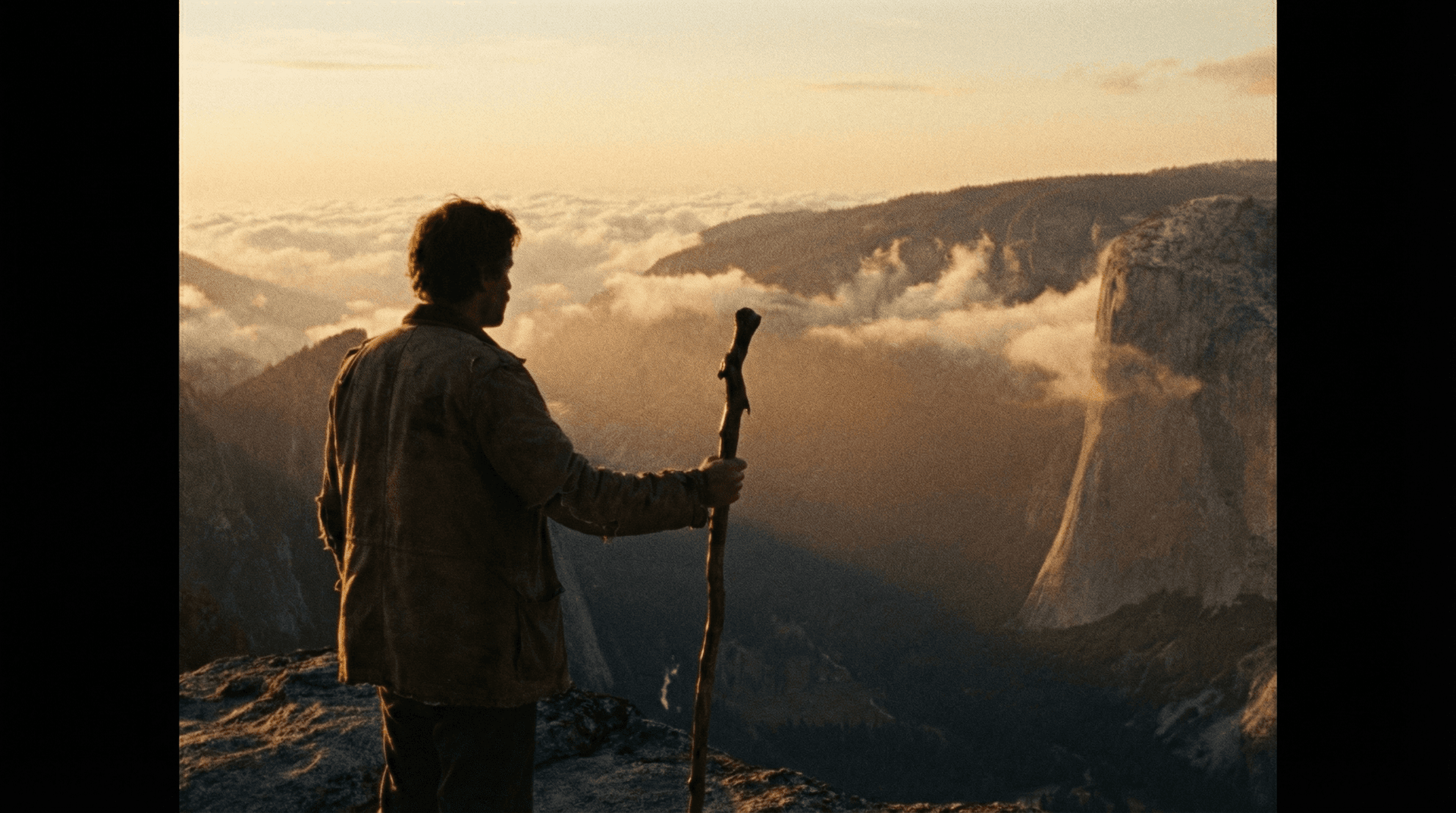
You have a specific ability to see where someone is and know what they need next. Not in a prescriptive way. The next question, the next reframe, the distinction that makes something they've been circling suddenly land. You see the gap between where they are and where they could be, and you know how to build a bridge rather than pushing them across.
People have told you that you explain things in a way that makes them feel like they already knew it. That's not an accident. You meet them at their understanding and extend from there.
What the Guide pattern actually is
The Guide pattern is organized around transmission. The capacity to move understanding from where it exists to where it needs to go, across the gap between what one person knows and what another is ready to receive.
This isn't the same as being knowledgeable. The world has many knowledgeable people who cannot teach. The Guide has the specific additional capacity to locate where another person actually is, rather than where they assume them to be, and to start from there.
Find yours
Which pattern is running you right now — and what's the shadow it carries?
Take the free assessment →Free · 15 minutes · Full report $49
Jung's wise old man and wise old woman figures are relevant here. In Jungian psychology, these are inner figures of accumulated wisdom, the parts of the psyche that carry genuine understanding gained through experience. The Guide archetype embodies this capacity in the personality: the genuine transmission of hard-won insight.
The gift
When the Guide pattern is working well, it creates something valuable: the conditions under which other people find their own answers. This is the distinction. The Guide doesn't deliver answers. They create the space, the question, the sequence, the environment in which the other person arrives at understanding that's genuinely theirs.
This produces strong outcomes in teaching, coaching, mentoring, and any role that translates understanding from one domain or person to another. The Guide's students and clients tend to internalize what they learn because they arrived at it rather than receiving it.
Content made from this pattern has a clarifying quality. The Guide writes in ways that make the complex feel possible. Their audience learns, and comes back to learn more, because the learning feels good.
The shadow: The Preacher
The shadow archetype of the Guide is the Preacher.
The Preacher has certainty. It has moved from "this is what I understand" to "this is what you should do." The question has become the answer. The curiosity has become the curriculum.
The Preacher doesn't meet people where they are. They meet people where the system says they should be. The guidance becomes prescription: these are the steps, this is the right approach, here is what your experience means. The other person's actual experience becomes material to be processed by the Guide's framework rather than something to be genuinely received.
It's a subtle shift, and it often looks like wisdom from the outside. The Preacher speaks with authority. The system is coherent. People follow it. The problem is that following a prescription is not the same as arriving at your own understanding. The Preacher's students become dependent rather than capable. They need the next teaching rather than developing their own discernment.
How this pattern shows up in work and creative life
The Guide pattern is suited to teaching, coaching, mentoring, facilitation, and any role that involves translating understanding across a gap. Also to writing, in both the sense of educational writing and in the craft of narrative, where the job is moving the reader from where they are to somewhere they couldn't get to alone.
In business, this pattern builds strong educational brands. The Guide tends to attract audiences because their content creates genuine learning rather than just information. People return because the understanding compounds.
The friction tends to arrive when the Guide encounters someone who doesn't want guidance, or who encounters the Guide's system and pushes back on it. The Preacher emerges when genuine pushback is experienced as error rather than as a data point worth being curious about.
The Guide in coaching and professional practice
Most coaches, therapists, and teachers are living this pattern or something adjacent to it. The Guide archetype accounts for a significant share of people who choose helping-and-teaching professions precisely because its gifts match what those roles require: genuine transmission, the ability to meet people where they are, and a relationship to knowledge that is generous rather than hoarding.
In coaching specifically, the pattern tends to produce practitioners who are skilled at asking the question the client didn't know they needed. The Guide has a feel for the edge of someone's understanding. They can sense when a person is ready for the next thing, and they don't push past it. This is rarer than it looks. Many coaches are operating from a different pattern entirely, often the Healer or the Sovereign, and the approach has a correspondingly different texture.
The Preacher shadow matters in professional practice because it tends to emerge under specific conditions: when the Guide is working with resistant clients, when their framework isn't producing the expected result, or when they've been teaching the same material long enough that it has calcified from living insight into fixed curriculum. The antidote is usually contact with a new problem, something that requires the Guide to not know the answer for a while. The not-knowing is the corrective.
There is also a pattern worth naming at the structural level: the Guide's students and clients sometimes become dependent rather than capable. The Preacher produces this outcome directly, but even a well-functioning Guide can attract people who want to remain in the learning relationship indefinitely rather than internalize the understanding and move. The integrated Guide builds toward their own redundancy. They create conditions for the other person to stop needing them.
If you're building a practice around this pattern, shadow work for coaches maps the specific shadow dynamics that surface professionally. The Empath archetype is the pattern most often confused with the Guide. Both work in relational attunement, but the orientation differs in ways that matter for how a practice is structured.
The integration question
Integration for the Guide is holding the knowledge lightly enough to be surprised by the person in front of them. The integrated Guide can have accumulated understanding and still be genuinely curious about what's particular in this situation, this person, this moment.
The behavioral marker: the integrated Guide can ask a question and genuinely not know where it will go. They can receive an answer that doesn't fit their model and be interested in that rather than troubled by it. They can let the session go somewhere they didn't plan.
The wisdom stays. The certainty softens. What's left is a Guide who is both genuinely knowledgeable and genuinely present, capable of transmitting what they know without needing the other person to arrive at the same place they did.
What is the guide archetype?
The guide archetype is the Jungian pattern organized around transmission. People living this pattern have a genuine ability to meet someone where they are, see what they need next, and create the conditions for genuine discovery. They make complex things accessible and produce understanding that the other person actually owns.
What is the guide archetype shadow?
The shadow of the guide archetype is the Preacher. The Preacher has moved from curiosity to certainty and from facilitation to prescription. The wisdom becomes a system, and the other person's experience becomes material to be processed through it. The Preacher's students become dependent rather than capable.
What does the guide archetype mean in Jungian psychology?
In Jungian psychology, the guide archetype connects to Jung's wise old man and wise old woman inner figures — the accumulated wisdom of the psyche. The archetype carries the capacity to transmit genuine understanding across the developmental gap. The shadow emerges when that wisdom calcifies into dogma and the Guide stops being curious about the particular person in front of them. The 12 Jungian archetypes each carry this same movement from gift to shadow.
The only way to know your alchetype — and the shadow it carries — is to take the assessment.
Discover your alchetype — free →
If the guide archetype is your dominant pattern, building a guidance business around it may be the most natural professional expression of who you are. What a guidance business actually is — and how it differs from coaching →