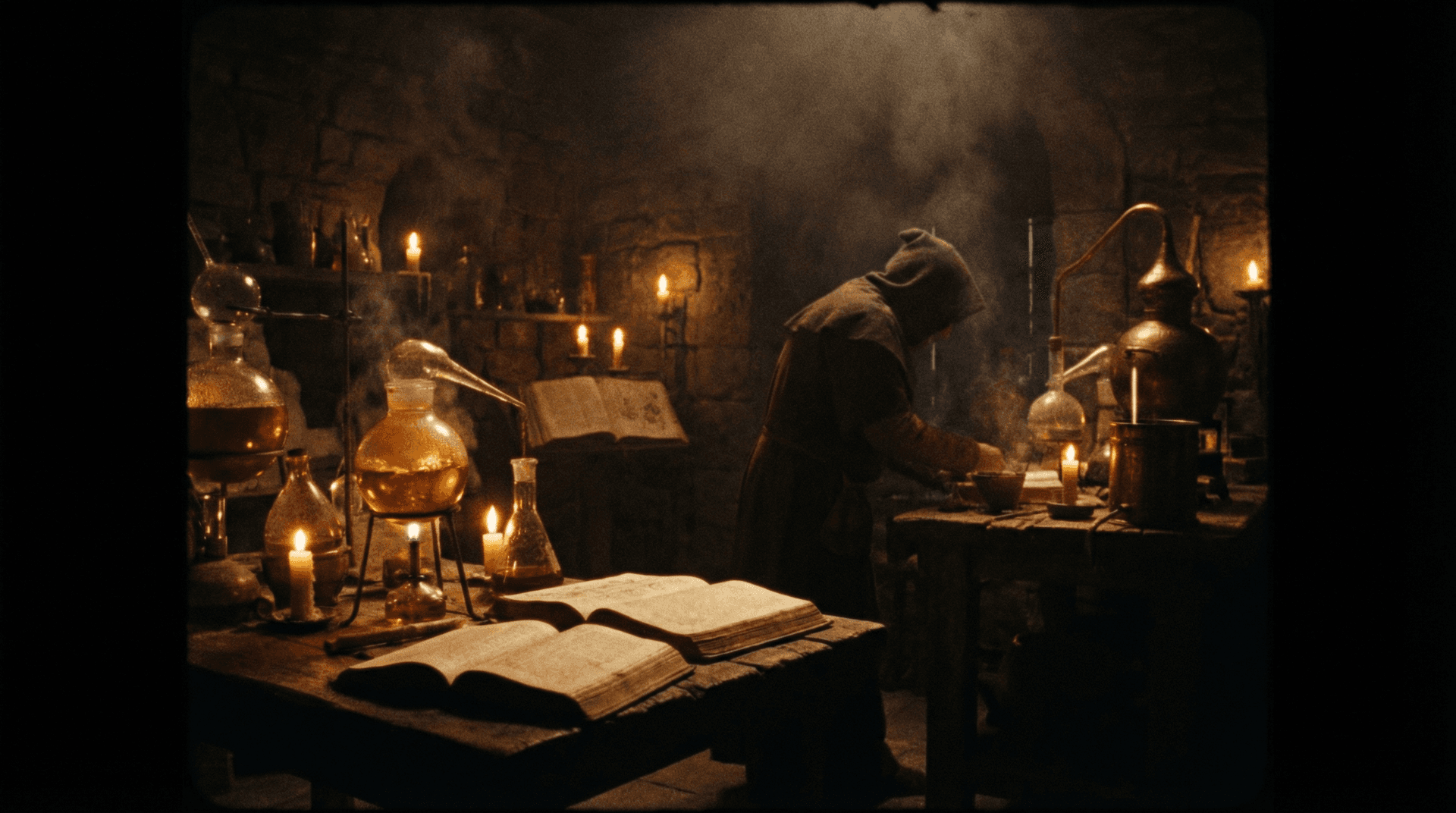
Something in you responds to difficulty differently than most people. Where others see a problem to be avoided or solved as quickly as possible, you see material. The stuck client, the broken system, the failed project. You notice what's inside the difficulty that hasn't been used yet.
This shows up as an almost instinctive ability to reframe. People bring you their struggles and leave with a different relationship to them. You convert. It's not a technique you learned. It's the lens through which you naturally see.
What the Alchemist pattern actually is
The Alchemist pattern is organized around transformation. Specifically, the conversion of raw or difficult material into something that serves. This is the personality built around the recognition that nothing is purely waste, that everything difficult contains something that can be used.
Jung spent years studying alchemical texts not as historical curiosity but as maps of inner transformation. The work of the alchemist, in his reading, was the psychological process of turning undeveloped or shadow material into conscious capacity. The archetype carries that orientation: it sees what could be made from what is.
Find yours
Which pattern is running you right now — and what's the shadow it carries?
Take the free assessment →Free · 15 minutes · Full report $49
This pattern tends to develop in people who had to convert difficulty early. Who learned to find value in what seemed worthless, to build something from limited materials. The gift arrived through necessity.
The gift
When the Alchemist pattern is working well, it produces genuine transformation in the lives of others. Not inspiration, not motivation. Actual structural change in how someone understands a problem, approaches their work, or relates to difficulty.
The Alchemist creates conditions. That's the distinction. They don't carry people through change. They create the environment, the question, the reframe, the exact right pressure at the exact right moment, and the change happens inside the other person. The process is genuinely theirs.
This pattern produces strong work in coaching, consulting, facilitation, and product development. Any domain where the job is converting problems into solutions, or converting raw material into something with new utility. The Alchemist excels in roles where others have given up on what they're working with. The container that holds this work most cleanly tends to look closer to a guidance business than a packaged coaching offer. The Healer archetype shares much of this domain but works specifically with wounds and restoration. The Alchemist works with raw material and the creation of something that didn't exist before.
The shadow: The Manipulator
The shadow archetype of the Alchemist is the Manipulator. The Alchemist archetype meaning article covers the full dynamic — including how the Manipulator shadow tends to appear most clearly in coaching and facilitation contexts.
The shift is subtle. It begins when the Alchemist loses faith in the organic process of transformation. When change is moving too slowly, or when the outcome feels uncertain, or when trust in the process has run thin. At that point, the pattern shifts from creating conditions to engineering outcomes.
The Manipulator doesn't create conditions for someone's own change. It shapes how they perceive the situation. It works the narrative, manages the room, positions information for maximum effect. It's intelligent and often highly effective in the short term.
The corrosion is slow. The people around the Manipulator start to feel, without being able to say why, that they're being managed rather than met. That something is being moved in them rather than moved with them. Trust erodes in ways that are hard to trace.
The Alchemist in shadow mode still believes they're doing transformation. They've just stopped trusting that the transformation will happen without them steering it.
How this pattern shows up in work and creative life
The Alchemist pattern is well suited to any work where the primary function is change. Coaching and therapy, where the job is converting limitation into capacity. Consulting, where the job is converting a broken system into a functional one. Facilitation, where the job is converting conflict or stagnation into movement.
In creative work, this pattern produces work that moves people. The Alchemist doesn't describe experience, they convert it. Their writing, their content, their workshops tend to shift something in the people who encounter them. The work has active rather than passive effect. This is where the Alchemist and the Guide archetype diverge most clearly: the Guide transmits; the Alchemist transforms.
The friction tends to arrive in the relationship to outcomes. The Alchemist can become frustrated when transformation doesn't happen on the timeline they can see. They can over-engineer their client relationships, their content, their business model. The Manipulator shadow appears most often under pressure toward results. The structural antidote, in practice, is closer to how to build a conscious business: an architecture that protects the work from being driven by the shadow's impatience.
The integration question
Integration for the Alchemist is the practice of trusting that not every transformation needs to be engineered. Some things change on their own timeline. Some things that look like stagnation are composting.
The behavioral shift is specific: the integrated Alchemist can set up the conditions and then release attachment to the outcome. They can offer the reframe, hold the container, ask the precise question, and then let the other person's process be their own. They don't need to monitor whether it's working.
This isn't passivity. It's a different relationship to the transformation itself. The Alchemist in integration understands that their job is to create the conditions, not to be the cause. That distinction is everything. When the engineering impulse arises, it becomes information rather than instruction. A signal that trust has run thin, an invitation to return to the process.
How this pattern relates to others
The Alchemist overlaps most closely with the Healer archetype. Both are drawn to difficulty, both work in the space between what someone is and what they're becoming. The orientation differs. The Healer works with wounds and the restoration of what was lost. The Alchemist works with raw material and the emergence of something that didn't exist before. When both patterns are present in the same person, the work tends to carry unusual depth.
The Mystic archetype is the Alchemist's most natural counterpart in the framework. Where the Mystic perceives depth, the Alchemist moves it. Many people living the Alchemist pattern carry a strong Mystic current underneath. The two work together: the Mystic reads the field, the Alchemist changes it.
The Guide archetype maps the risk the Alchemist most needs to watch. The Guide learns to let the teaching go once it has been given. For the Alchemist, the threshold is the same: the transformation is already happening. It doesn't need steering. That trust is what the Manipulator shadow is asking for, in the moments when it shows up as control.
What is the alchemist archetype?
The alchemist archetype is the Jungian pattern organized around transformation. People living this pattern see potential in difficulty and have a natural capacity to convert problems into something useful. They create conditions for other people's change and are drawn to any domain where raw material needs to become something more complete.
What is the alchemist archetype shadow?
The shadow of the alchemist archetype is the Manipulator. When trust in organic transformation breaks down, the pattern shifts from creating conditions to engineering outcomes. The Manipulator shapes perceptions, manages narratives, and works the room with precision. The effect on relationships is gradual but real: people begin to feel managed rather than met.
What does the alchemist archetype mean in Jungian psychology?
In Jungian psychology, the alchemist archetype is grounded in Jung's extensive study of alchemy as a map of psychological transformation. The work of turning lead into gold was, in Jung's reading, a projection of the psyche's own transformative capacity. This archetype carries that orientation: the ability to work with difficult, broken, or unrealized material and move it toward something more whole. For the full picture of all 12 patterns, the framework maps each archetype against its shadow in the same way.
The only way to know your alchetype — and the shadow it carries — is to take the assessment.